

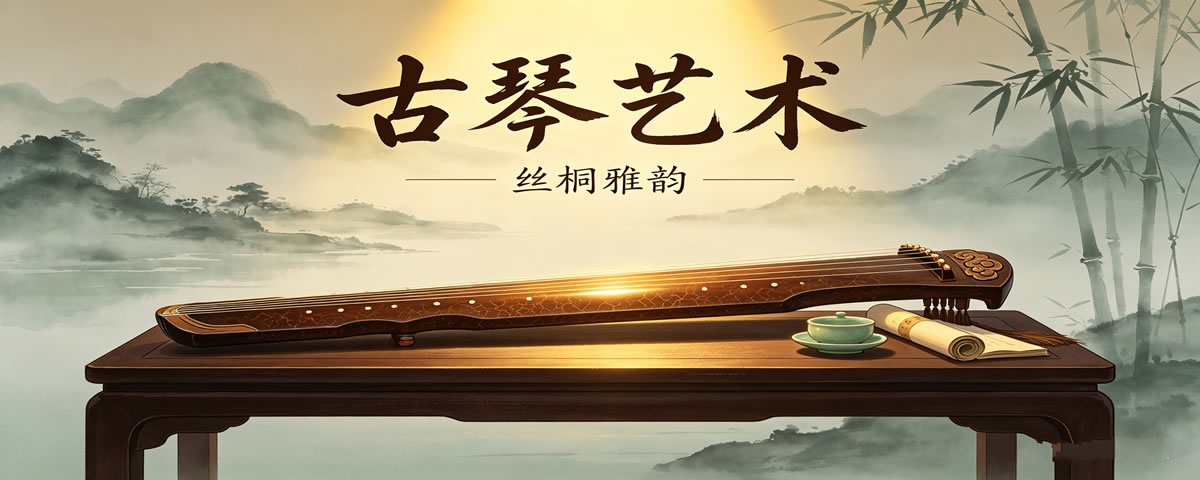
Guqin Art
古琴是中国最古老、最典雅的弹拨乐器之一,距今已有三千多年历史
Guqin Art
Guqin, a seven-stringed plucked instrument without frets, is one of the oldest and most elegant traditional musical instruments in China. With a history of more than 3,000 years, it has been regarded as the "instrument of sages" and the core carrier of Chinese traditional literati culture. It is not only a musical instrument, but also a symbol of Chinese philosophy, morality, aesthetics and spiritual realm, representing the quiet, gentle, broad and profound cultural character of the Chinese nation. Guqin art integrates music, literature, calligraphy and painting, and has a strict and delicate performance system. Its playing styles are peaceful and far-reaching, advocating the pursuit of "peace of mind" and "harmony between man and nature". The timbre is divided into San Yin, Fan Yin and An Yin, which are respectively bright, empty and deep, corresponding to the heaven, earth and man in traditional Chinese thought. Guqin music is mostly slow, quiet and implicit, expressing the feelings of mountains and rivers, friendship, self-cultivation and life perception, conveying the spiritual pursuit of tranquility, indifference and transcendence. Throughout history, guqin has been closely connected with literati and scholars. Confucius took guqin as an essential part of education, emphasizing that "one cannot be without learning for a day". Many great thinkers, poets and artists were proficient in guqin, leaving countless famous pieces such as "High Mountain and Flowing Water", "Plum Blossom Melody", "Three Variations of Plum Blossom" and "Dialogue between Fisherman and Woodcutter". These works carry historical memories and cultural genes, recording the spiritual world and aesthetic taste of the Chinese people. As an intangible cultural heritage of humanity, guqin art has broken geographical and cultural boundaries and spread to the world. It shows the unique charm of oriental music and culture on international occasions, becoming an important bridge for cultural exchanges between China and foreign countries. Today, guqin is returning to public life, loved and inherited by more people. It carries traditional Chinese wisdom and spirit, continues to play a quiet and far-reaching sound, and conveys the eternal beauty and profound heritage of Chinese culture to the world.
古琴艺术
古琴是中国最古老、最典雅的弹拨乐器之一,距今已有三千多年历史,被尊为 “圣人之器”,是中国传统文人文化的核心载体。它不仅是一件乐器,更是中华哲学、伦理、审美与精神境界的象征,代表着中华民族宁静、谦和、博大、深邃的文化品格。 古琴艺术融音乐、文学、书画于一体,拥有严谨细腻的演奏体系。其演奏风格清微淡远、中正平和,讲求 “心静”“天人合一” 的境界。音色分散音、泛音、按音三种,分别对应天、地、人,音色空灵、苍劲、深沉,意境悠远。琴曲多舒缓、含蓄、内敛,以山水情怀、知音道义、修身养性、人生感悟为主题,传递宁静、淡泊、超然的精神追求。 自古以来,古琴与文人雅士密不可分。孔子以琴乐为教化之本,强调 “不可一日无学”;历代思想家、诗人、艺术家多精通琴艺,留下《高山流水》《梅花三弄》《渔樵问答》等传世名曲。这些作品承载着历史记忆与文化基因,记录着中国人的精神世界与审美情趣。 作为人类非物质文化遗产,古琴艺术已跨越地域与文化界限,走向世界。它在国际舞台上展现东方音乐与文化的独特魅力,成为中外文化交流的重要桥梁。今天,古琴重回大众生活,被更多人喜爱与传承。它承载着中华传统智慧与精神,继续奏响清和悠远的乐章,向世界传递中华文化永恒的美感与深厚底蕴。