

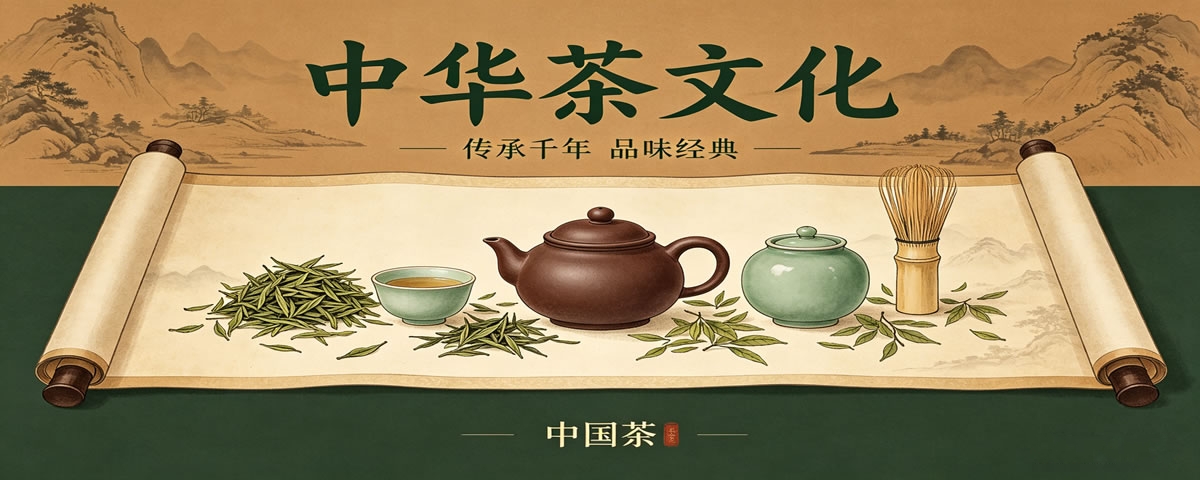
Chinese Tea Culture 中华茶文化
As the origin of tea in the world, China has a tea history spanning more than 5,000 years. Tea is not only a daily drink but also a carrier of history, culture, etiquette and philosophy. Chinese tea culture integrates production, craftsmanship, ceremony, health preservation and aesthetics, forming a unique cultural system that has influenced the whole world.
中国是世界茶叶的发源地,拥有五千多年的饮茶历史。茶不仅是日常饮品,更是历史、文化、礼仪与哲学的载体。中华茶文化融合了生产、工艺、仪式、养生与美学,形成了独树一帜、影响世界的文化体系。
Origin and Historical Evolution 起源与历史演变
Tea was first discovered and used by ancient Chinese ancestors. It began as a medicinal herb, gradually evolved into a daily beverage, and flourished in the Tang and Song dynasties. From the initial wild tea picking to artificial cultivation, from simple boiling to elaborate brewing, tea has been closely integrated with Chinese social life, becoming an indispensable part of royal life, literati art, folk customs and religious rituals.
茶叶最早由中国上古先民发现并使用,最初作为药用植物,逐步演变为日常饮品,在唐宋时期达到鼎盛。从最初的野生采摘到人工种植,从简单煮饮到精细冲泡,茶叶深度融入中国社会生活,成为皇室生活、文人艺术、民间习俗与宗教礼仪中不可缺少的组成部分。
Classification and Craft Characteristics 茶类划分与工艺特点
Chinese tea is divided into six major categories according to production process and oxidation degree: green tea, black tea, oolong tea, dark tea, white tea and yellow tea. Each category has unique picking standards, withering, fermentation, fixation, rolling and baking techniques, forming distinct aromas, tastes and appearances. These traditional techniques have been passed down for thousands of years and become important intangible cultural heritage.
中国茶叶按照制作工艺与氧化程度分为六大类:绿茶、红茶、乌龙茶、黑茶、白茶、黄茶。每一类都有独特的采摘标准、萎凋、发酵、杀青、揉捻、烘焙等工艺,形成截然不同的香气、滋味与外形。这些传统工艺传承千年,成为重要的非物质文化遗产。
Tea Ceremony and Cultural Connotation 茶道与文化内涵
Chinese tea ceremony focuses on harmony, quietness, elegance and truth. It is a practice that cultivates morality, cultivates sentiment and promotes communication through tea tasting, tea appreciation and tea etiquette. The tea ceremony embodies the traditional Chinese philosophical thoughts of Confucianism, Buddhism and Taoism, emphasizing the unity of man and nature, mutual respect and equality, and inner peace. It is not only a way of drinking tea, but also a life attitude and cultural belief.
中国茶道讲究和、静、雅、真,是通过品茶、赏茶、行茶礼来修身养性、陶冶情操、促进交流的生活方式。茶道融合了儒、释、道三家传统哲学思想,强调天人合一、互相尊重、平等相待与内心宁静,它不仅是饮茶方式,更是一种人生态度与文化信仰。
Tea Trade and Cultural Communication 茶叶贸易与文化传播
Since ancient times, tea has been an important commodity on the Silk Road, the Ancient Tea Horse Road and maritime trade routes. Chinese tea spread to all parts of the world through trade, promoting cultural exchanges between the East and the West. Today, tea has become one of the most popular drinks in the world, and Chinese tea culture continues to play an important role in international cultural exchanges and economic and trade cooperation.
自古以来,茶叶就是丝绸之路、茶马古道与海上贸易路线上的重要商品。中国茶叶通过贸易传播到世界各地,推动了东西方文化交流。如今,茶叶已成为全球最受欢迎的饮品之一,中华茶文化在国际文化交流与经贸合作中持续发挥重要作用。
Contemporary Value and Inheritance 当代价值与传承发展
In modern society, Chinese tea culture is constantly innovating and developing. It combines traditional craftsmanship with modern life, and is widely loved by people of all ages. Tea culture represents health, elegance and peace, and has become an important symbol to show Chinese cultural soft power. Protecting and inheriting tea culture is of great significance to promoting traditional culture and enhancing cultural confidence.
现代社会中,中华茶文化不断创新发展,将传统工艺与现代生活相结合,受到各年龄段人群的广泛喜爱。茶文化代表健康、优雅与宁静,成为展现中国文化软实力的重要符号。保护与传承茶文化,对弘扬传统文化、增强文化自信具有重要意义。
Copyright Notice: This article is originally compiled by Shanghai World Trade Portal. Please indicate the source when reprinting.
版权声明:本文由上海世贸网原创整理,转载请注明出处。